The Justice Department is seeking approximately $290.4 million in unpaid duties and fraud penalties from Uni-Tile & Marble Inc. and its chief executive officer, Xin Mian Pan, in a civil customs enforcement action that examines their alleged role in imports entered through other companies.

A Russian national extradited from Sweden faces federal charges for allegedly using a Hong Kong electronics company to obtain U.S. components for Russian customers, conceal their ultimate destination, and finance purchases through overseas bank accounts.

Sasa Micev, a Bosnian national, was sentenced to five years in federal prison after pleading guilty to violations of the International Emergency Economic Powers Act and the North Korea Sanctions Regulations arising from an attempted purchase of North Korean anti-aircraft missiles, the Justice Department announced October 14, 2026.
OFAC’s $175,015 settlement with Pegasus Worldwide Logistics underscores that sanctions exposure extends beyond deficient screening to incomplete responses during an investigation. The freight forwarder failed to identify a designated supplier despite matching contact information, then took six months to provide a complete subpoena response, prompting six separate reporting violations.
The directive signals that trade-fraud and qui tam matters may no longer remain discrete civil investigations. Allegations involving unpaid duties, false origin claims, undervaluation, misclassification or forced labor may prompt parallel criminal, tax, securities and asset-forfeiture inquiries. Importers and other supply-chain participants should investigate credible allegations promptly, preserve evidence and assess disclosure options before DOJ independently identifies the conduct.

The case illustrates how an AML program can fail when its risk assessment does not reflect its core business. Regulators found that American Express gave insufficient attention to its dominant credit and charge card operations, allowing weaknesses in customer due diligence, transaction monitoring and reporting to persist for years.

The case shows that even a small investment through an overseas subsidiary can expose a U.S. parent to substantial penalties. Treasury fined Amidi more than twice the underlying investment’s value for a missed notification, underscoring the need for investors and counsel to identify covered transactions across foreign funds and subsidiaries, document their diligence and meet filing deadlines—even when an investment is permitted.

Another former TD Bank branch employee has pleaded guilty to taking bribes to help launder millions of dollars to Colombia, extending a series of prosecutions that has targeted tellers, retail employees and an assistant branch manager while producing no criminal charges against senior bank executives.
Foreign bribery enforcement remains active across multiple jurisdictions, with hundreds of investigations pending and exposure extending to companies, individuals, and related accounting and money-laundering offenses, according to the OECD’s enforcement report covering 1999 through 2025.
Lambda Research Corporation, a Massachusetts optical-design software company, admitted conduct underlying 66 export-control violations in a settlement with the U.S. Commerce Department’s Bureau of Industry and Security. The October 2 order imposes a $2 million civil penalty but suspends payment for one year.

The memorandum sets investigation priorities for the DOJ’s Fraud Division and identifies factors prosecutors must weigh heavily in corporate charging decisions and negotiated resolutions, including management involvement, harm to taxpayer-funded programs, national security threats and immigration offenses. It also directs new whistleblower incentives, pairing targeted enforcement with efforts to encourage disclosures from companies and individuals, including participants in the misconduct.
A California technology executive was arrested October 1 on charges that he helped smuggle more than $300 million in export-controlled computer servers to China through intermediaries in Malaysia and Singapore.
A growing share of Bureau of Industry and Security export-control settlements under the Trump administration have approached the maximum penalties allowed by law, according to a Center for Strategic and International Studies analysis published September 24. The findings sharpen a review of BIS enforcement, which found that BIS has completed fewer administrative enforcement matters, as a small number of large settlements have driven aggregate penalties sharply higher.
The case illustrates how overseas intermediaries can conceal the Iranian destination of U.S. technology behind an ostensibly legitimate sale to China. Dindar’s admitted use of false destination claims underscores the importance of verifying the ultimate end user and intended use of sensitive exports, particularly when a third-country buyer arranges onward shipment.
A Virginia company concealed its Russian ownership to sell digital forensic software to the U.S. Secret Service, federal prosecutors alleged in charges announced September 23 against its CEO and a Russian owner.

A Russian national with Swiss and Estonian citizenship has pleaded guilty to conspiring to illegally export nearly $2 million in U.S.-origin aerospace components to Russia. DOJ announced Andrei Samuilovski’s plea on September 14, 2026.

The agreements close one of the FIFA investigation’s oldest cases on softer terms than prosecutors sought in 2015. They follow the Justice Department’s dismissal of reinstated convictions against Full Play and a former Fox executive—a result the U.S. attorney said reflected the Trump administration’s enforcement priorities.

The Sept. 9 actions broaden the campaign from scam compounds to the financial and technological networks that support them, while underscoring a separate problem: seized cryptocurrency can be difficult to return to victims.

When faculty disclosures, conflict-of-interest records, sponsored-research systems and export-control processes remain siloed, undisclosed foreign ties can create exposure under grant rules, agency-specific restrictions and the False Claims Act—even when the relevant information already exists somewhere within the university.
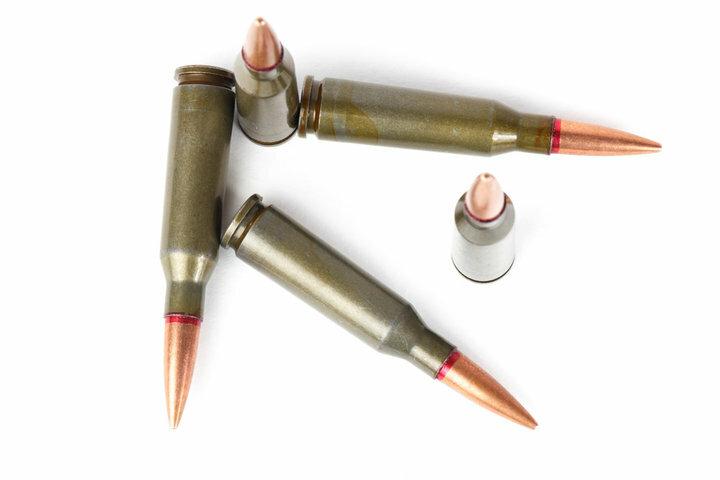
Most of the ammunition was subsequently reexported from Kyrgyzstan to Russia, DOJ said. The department described the ammunition as military-grade and said Gruber’s conduct supported Russia’s war effort.