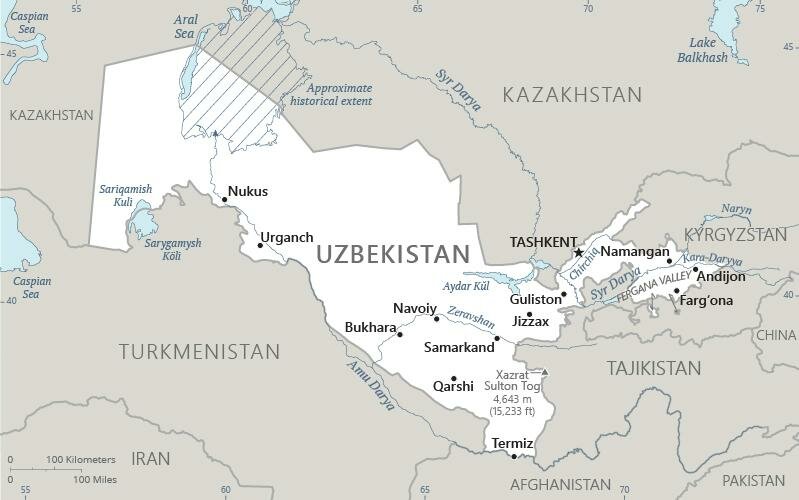
The United States and Uzbekistan announced an “early harvest” package of trade commitments Thursday, using Ambassador Jamieson Greer’s visit to Tashkent to accelerate negotiations toward a broader Agreement on Reciprocal Trade and Investment. The move signals Washington’s continued shift toward bilateral, reciprocity-based trade deals that pair market-opening commitments abroad with case-by-case U.S. tariff treatment at home.
Under the package, Uzbekistan committed to eliminate or reduce tariffs on a range of U.S. industrial goods and agricultural products. The United States, in turn, said it would give “favorable consideration” to tariff treatment for Uzbek industrial and agricultural goods, where appropriate and consistent with U.S. law.
The announcement follows meetings between President Trump and Uzbek President Shavkat Mirziyoyev in 2025 and builds on Greer’s broader trip to India and Uzbekistan. USTR said earlier this week that Greer would meet Mirziyoyev, Saida Mirziyoyeva and Deputy Prime Minister Jamshid Khodjaev to discuss “fair, balanced, and reciprocal trade” with the United States.
The immediate significance lies in Uzbekistan’s tariff commitments. If implemented as described, the package could improve access for U.S. farm products, machinery, industrial inputs and other goods in a Central Asian market where Washington has been seeking deeper commercial and strategic ties.
In 2024, USTR removed Uzbekistan from the Special 301 Watch List, citing “sustained progress” on long-running IP protection and enforcement issues. USTR specifically pointed to Uzbek Customs Code amendments giving authorities ex officio authority to suspend and seize counterfeit imports and exports, and to Uzbekistan’s high-level participation in the IP Working Group under the U.S.–Central Asia Trade and Investment Framework Agreement.
This is not a full trade agreement yet. The U.S. side’s “favorable consideration” language suggests discretion rather than automatic tariff relief.
The announcement fits the administration’s 2026 pattern of using reciprocal trade frameworks and early commitments to secure market access, tariff concessions and alignment from selected partners before final agreements are completed.



Comments
No comments on this item Please log in to comment by clicking here